
Invited Keynote 2026
From Climate-Health Research to Citizen Engagement: Lessons and Tools from the TRIGGER Project
Climate change is reshaping the burden of cardiovascular and respiratory disease, yet the pathways linking meteorological conditions, environmental exposures and individual health remain difficult to quantify. The Horizon Europe project TRIGGER addresses this gap through an exposome-based approach, combining direct collection of health, weather, environmental and socio-economic data with user-friendly tools, and translating the resulting knowledge into action at both personal and policy level.
A central component of this approach is a network of five Climate-Health Connection (CHC) Labs, spanning a climatic gradient from subarctic to Mediterranean, where citizens, clinicians, researchers and policymakers meet, exchange and co-create solutions in real-world settings. In this context, we discuss how the Labs supported two multicentre clinical studies: CrossCLAVIS, which compares acute symptoms occurring during extreme climate events with the same symptoms under normal conditions and has enrolled more than 1,200 patients, and LongCLAVIS, which follows volunteers with heterogeneous exposure profiles through low-cost wearable and environmental sensors, generating continuous feedback loops with participants. Each Lab ran an iterative engagement cycle, kick-off meetings, workshops, panel and group discussions, adapted to its local context.
We present the lessons learned across the five Labs: how the timing of engagement relative to research maturity conditions what can genuinely be co-designed, how tangible tools turn dissemination into dialogue, what long-term participation costs volunteers, and which groups remain hard to reach without local intermediaries.
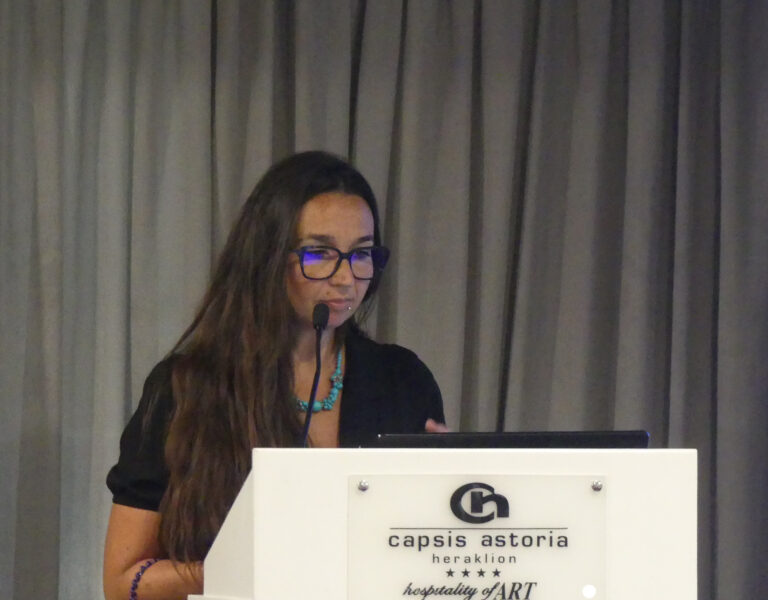
Ph.D. Maria Carelli
Health Researcher, Cardiology Unit
IRCCS Azienda Ospedaliero
Universitaria di Bologna, Italy
Bio
Maria Carelli is a health researcher at the Cardiology Unit of the IRCCS Azienda Ospedaliero-Universitaria di Bologna, Italy.
She earned her BSc in Biomedical Laboratory Techniques at the University of Bologna (2011) and her MSc in Bioinformatics and Medical Biotechnology at the University of Verona (2015).
She obtained her Ph.D. in Applied Life & Health Science, curriculum in Microbiology and Infectious Diseases, at the University of Verona in 2019, and completed a postgraduate specialization in Health Statistics and Biometry at the same university in 2024.
Her main research topics and scientific production focus on the interface between environment, infection and cardiovascular disease: climate-induced health risks, cardiovascular epidemiology, medical statistics, remote monitoring of cardiac patients, and molecular diagnostics of infection.
From 2018 to 2023, at the Microbiology Section of the University of Verona, she coordinated projects on molecular diagnostics and antimicrobial resistance. In 2025 she was awarded a grant from Fondazione Carisbo for IMPROVE-CIED, a project on personalized monitoring of infectious risk through viral biomarkers in patients with cardiac implantable electronic devices. She is the author of more than twenty peer-reviewed publications since 2021 and mentors students and Ph.D. candidates in Health & Technologies.
She acts as scientific referent and monitor for several ongoing clinical studies of the Cardiology Unit, and as referent for a regionally funded project on cardiorespiratory monitoring through wearable devices, developed within an initiative dedicated to citizen engagement as a route to knowledge valorization. Across these projects she serves as a liaison between clinical research groups and external academic partners.
Her current work centres on the Horizon Europe project TRIGGER (SoluTions foR mItiGatinG climate-induced hEalth thReats), where she coordinates the European multicentre studies CrossCLAVIS and LongCLAVIS for the Bologna site as lead collaborator to the Principal Investigator, from protocol development and ethics submission to electronic case report form design, patient enrolment and citizen engagement.